
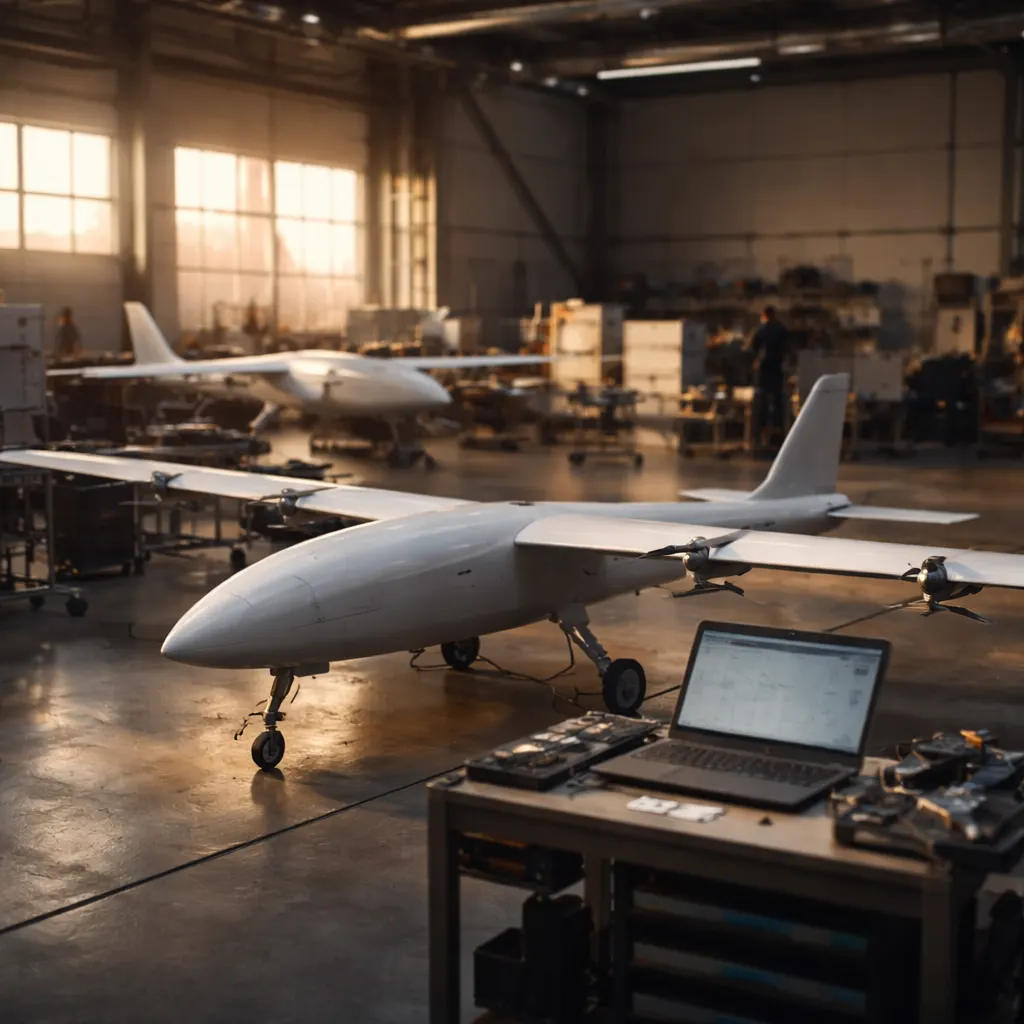
A Bengaluru-based startup has secured $2.5 million to develop autonomous aircraft capable of remaining airborne for over a year by drawing power from ocean winds. Alteon, established by 20-year-old Samay Sanghvi, revealed the pre-seed funding round Tuesday, led by prominent solo investor Lachy Groom with participation from Together Fund, according to a TechCrunch report published August 31, 2026. The company aims to build small autonomous planes that mimic the dynamic soaring technique albatrosses use to harvest energy from wind.
The startup plans to construct aircraft with roughly 3-meter wingspans that fly near the ocean surface, ascend through faster air currents, and repeat the pattern to capture wind energy through dynamic soaring—a process where planes move repeatedly between air layers traveling at different velocities. Alteon completed a recent trial of its autonomous flight system above the Bay of Bengal, during which the aircraft autonomously finished seven O-shaped loops exceeding 62 miles per hour while flying within 1 meter of the water's surface. The company now operates a 10,000-square-foot facility in Bengaluru with a 20-person team, constructing four to five aircraft weekly for testing and completing over 200 test flights in the past 30 days. Alteon received early support from Emergent Ventures and 1517 after Sanghvi formally founded the company in 2025, having started work on the concept straight out of high school in 2023.
However, Alteon hasn't yet proven its aircraft can maintain flight using energy harvested through dynamic soaring. The startup's next major milestone will be what Sanghvi calls "energy-neutral dynamic soaring," which would let the aircraft fly continuously with propulsion turned off by extracting sufficient energy from wind to stay aloft, he told TechCrunch. Dr. Gabriel Bousquet, a Silicon Valley aerospace and robotics engineer who studied dynamic soaring during his MIT PhD, described Alteon's low-altitude water flight as a "promising first result" but noted the tougher challenge will be demonstrating the aircraft can reliably extract enough energy from real-world winds to sustain extended flight periods. Dr. Bharath Swaminathan, who earned his PhD from IIT Madras studying dynamic soaring stability, said keeping an aircraft airborne for several days using the technique would itself represent "a very big step, and a big achievement."
The venture carries significant technical risk, which Groom acknowledged directly. Flying low enough to harvest wind energy safely presents particular difficulties, as the aircraft must handle turbulence, waves, spray, rain, and shifting light conditions while constantly sensing and responding to a moving ocean surface, Bousquet explained. Swaminathan added that while large-scale wind patterns may be foreseeable, local wind shear and turbulence can fluctuate considerably, making it harder for an aircraft to continuously extract wind energy—challenges that may only surface through real-world testing. Alteon intends to initially deploy the aircraft for maritime surveillance, providing governments with real-time insight into activity in their territorial waters, with eventual plans to use its propellers as turbines to convert harvested energy into electricity and recharge onboard batteries. If successful, indefinitely airborne aircraft could unlock a range of applications that conventional fuel- or battery-dependent planes can't sustain. The bet hinges less on whether the physics works—experts confirm it does—and more on whether a startup can engineer around the unpredictable chaos of ocean weather at scale, a problem that no amount of capital solves faster than iterative failure.