
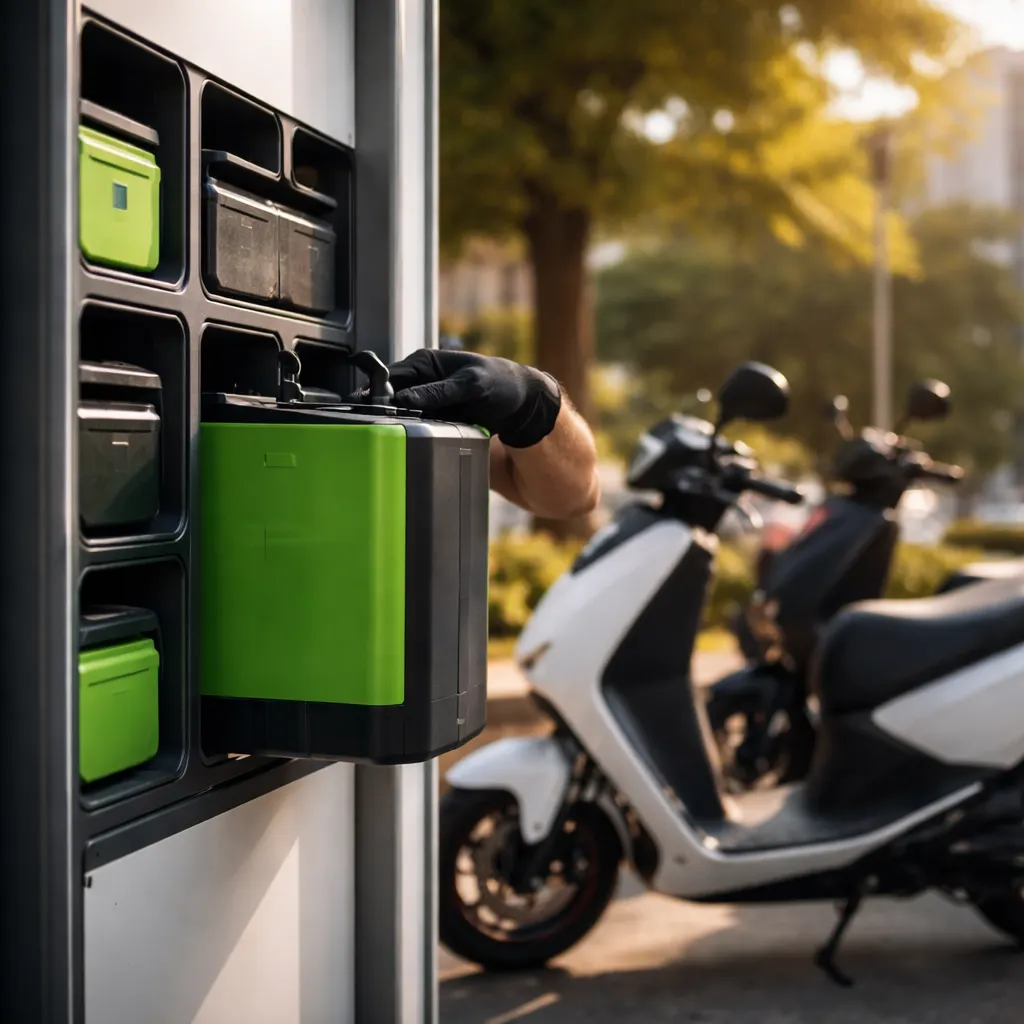
Canadian auto parts giant Magna International is investing an additional $35 million in Yuma Energy, a Bengaluru-based firm that operates a battery-swapping network for electric two- and three-wheelers, according to a report published by TechCrunch on August 31, 2026. The fresh capital will boost Magna's ownership stake beyond the 51% it secured when the joint venture launched, while diluting Yulu's 49% share, though the new ownership split wasn't disclosed. Magna believes battery swapping can succeed at scale in India, where millions of two- and three-wheelers and a rapidly expanding delivery economy create different economics than in much of the world, where the model has struggled to gain traction.
Yuma, which spun out of Indian mobility startup Yulu in early 2023, has finished more than 60 million swaps to date and now operates around 100,000 batteries across its network. The company runs over 400 stations with more than 2,500 charging units and closed the financial year ending in March 2026 with approximately ₹1 billion in revenue, or about $10.5 million. Yulu still represents the vast majority of Yuma's 60 million lifetime swaps, though that reliance has begun to ease as roughly 15% to 20% of swaps in the most recent quarter came from clients other than Yulu. Beyond Yulu, Yuma now serves more than five fleets and has integrated its batteries with over 10 vehicle platforms, including models from Kinetic Green, Motovolt, BGauss, and Quantum Energy. Yuma operates across 18 Indian cities, including Bengaluru, Hyderabad, Mumbai, and the Delhi region, as well as Jaipur, Lucknow, Indore, Coimbatore, Kochi, and Kolkata.
Yuma managing director Muthu Subramanian said in an interview that the firm is targeting EBITDA break-even within the next two quarters, though it isn't profitable yet. Some of its older swapping stations are already EBITDA-positive, according to Subramanian. He estimates that only about 10% to 15% of vehicles used by gig workers in India are electric today, leaving considerable room for operators like Yuma if more of those riders switch from gasoline-powered vehicles. "With Indian gig workers' high runtime on a daily basis, an EV makes absolute sense in terms of cost of ownership," Subramanian told TechCrurch. "Uptime is important." The company expects non-Yulu customers to represent about 25% of its swaps within the next two years.
Magna's latest investment hinges largely on India's growing gig economy, where delivery riders can lose valuable time and revenue while charging their EVs. Yuma is targeting those high-mileage riders, arguing that swapping offers more practicality than fast charging because a battery can be exchanged in under two minutes, while even a 20- or 30-minute fast charge takes a rider off the road and requires more space and power to serve multiple vehicles at once. However, building that convenience is costly, as Yuma must keep its batteries and swapping infrastructure ready before enough riders arrive to fully utilize them. Subramanian acknowledged that "it's a capital-intensive business, and the unit economics will play out at scale." The firm plans to use the bulk of Magna's investment to expand its swapping infrastructure and double its fleet of approximately 100,000 batteries over the next 12 to 18 months. With the fresh capital, Yuma plans to expand into Chennai and Pune in the coming quarters while adding more stations in cities where it already operates.
India will remain Yuma's focus for at least the next 12 to 18 months, but Subramanian said the firm plans to take the model overseas as part of its longer-term roadmap. Southeast Asian markets, including Vietnam and Thailand, as well as parts of Africa, could be attractive because of their large two-wheeler markets, though Yuma hasn't yet begun discussions about entering them. Unlike operators that simply run swapping networks, Yuma designs and manufactures its own battery packs and charging units, making battery packs at its facility in Chennai and charging units in Bengaluru, giving it control over both the hardware and the network that manages them. The unit-economics challenge facing battery swapping means established manufacturers with deep pockets may enjoy a decisive edge over startups racing to build networks before capital runs dry.